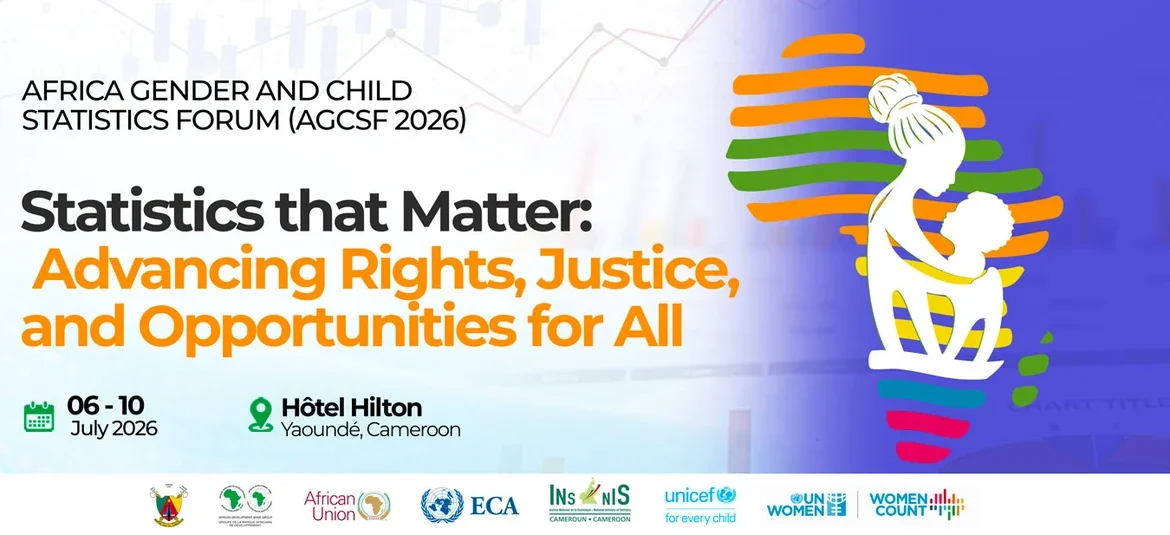
African leaders, statisticians and development partners have gathered in Yaoundé, Cameroon, for the First Africa Gender and Child Statistics Forum (AGCSF 2026), an initiative designed to address one of Africa’s biggest but often overlooked development challenges: the lack of reliable data on women, girls and children.
The forum, taking place from 6–10 July, brings together governments, researchers and civil society organisations to strengthen how gender and child statistics are collected and used in policymaking.
The problem: Decisions are only as good as the data behind them
Across Africa, governments are working to reduce child marriage, improve maternal healthcare, expand girls’ education and combat gender-based violence. However, progress is often hindered by incomplete or inconsistent data.
When governments lack accurate information about who is affected, where services are needed most and whether interventions are working, policies can miss the people they are intended to serve.
Experts say these data gaps can result in resources being poorly targeted, vulnerable communities being overlooked and inequalities remaining hidden.
The response:
Building stronger data systems
Rather than introducing a new programme for women and children, the forum focuses on improving the systems that inform those programmes.
Organisers, including the African Development Bank, the African Union Commission, the United Nations Economic Commission for Africa (UNECA), UNICEF and UN Women—say strengthening gender and child statistics will help governments make decisions based on evidence rather than assumptions.
The forum will examine ways to modernize household surveys, integrate Civil Registration and Vital Statistics (CRVS) systems, and establish standardized regional indicators.
A major shift in this year’s edition is the formal integration of child statistics.
By standardizing how countries track data on early childhood development, protection, and adolescent girl metrics, the initiative aims to create a unified framework that feeds directly into the upcoming Africa Gender Index (AGI) 2027.
This ensures closer collaboration between the people analyzing national data and the policymakers designing local laws.
Why experts believe this approach matters
Reliable data has long been recognised as a cornerstone of effective public policy.
It enables governments to identify vulnerable populations, monitor trends, evaluate programmes and direct limited resources where they are most needed.
Organisers say stronger statistical systems will also improve accountability by allowing countries to measure progress towards the Sustainable Development Goals, Agenda 2063 and Agenda 2040 for Children in Africa, while providing a stronger evidence base for future investments in health, education and child protection.
The limitations
Improved data alone will not transform lives.
Experts note that collecting better statistics must be followed by political commitment, sustained funding and policies that translate evidence into practical action.
Without implementation, stronger data systems will not automatically lead to better outcomes for women and children.
What this means for girls
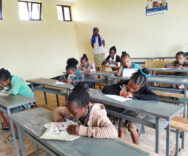
Better gender and child statistics can help reveal where girls face the greatest barriers to education, healthcare, and protection from violence.
This allows governments and development partners to design more targeted interventions that respond effectively to their needs.
For girls across Africa, stronger data systems mean their realities are more likely to be seen and counted in national policies and budgets — from reducing child marriage and improving maternal health to expanding access to quality education and safeguarding against gender-based violence.
Ultimately, the success of the forum will be measured not by the number of meetings held, but by whether the improved evidence translates into concrete policies and programs that improve outcomes for girls and children.